
The Hidden Cost of Cheap Consumables: Optimizing Polishing Film Lifecycles in Screen Refurbishment
In the high-volume screen refurbishment industry, profit margins are strictly dictated by unit economics and scrap rates. While capital equipment often dominates procurement discussions, the recurring cost and quality of phone screen polishing consumables silently dictate your true cost-per-unit and final yield. Upgrading to precision-matched consumables is not merely an operational expense; it is a strategic lever to maximize throughput and protect your bottom line.
The True Economics of Surface Scratch Removal
When processing thousands of units monthly, the abrasive quality of your materials directly impacts the optical clarity of the finished product. It is critical to establish clear operational boundaries: industrial polishing processes are engineered exclusively to remove light surface scratches from glass screens. They cannot and should not be used to repair cracked, deeply fractured, or shattered glass panels, which require complete panel replacement. For light surface imperfections, however, the right consumable matrix ensures a flawless finish that commands premium wholesale pricing.
How Inferior Consumables Inflate Your Scrap Rate
Procuring low-grade phone screen polishing consumables to save on upfront invoice costs is a false economy that rapidly erodes margins. Sub-standard cerium oxide powders often contain inconsistent particle sizes and impurities. During the polishing cycle, these irregularities act as secondary abrasives, introducing micro-scratches, holograms, or buffer marks into the glass substrate.
When a unit fails optical inspection due to these buffer marks, it re-enters the production queue for rework. This not only doubles the direct labor allocation but also occupies machine cycles that could have been used for pristine units, effectively lowering your overall throughput capacity and increasing the amortized cost per good unit. Furthermore, repeated reworking of the same panel thins the glass beyond acceptable tolerances, ultimately converting a salvageable unit into total scrap. By utilizing high-purity, consistently milled powders, refurbishment facilities eliminate these secondary defects and maintain a predictable, high-yield production line.
Optimizing the Polishing Film and Consumable Lifecycle
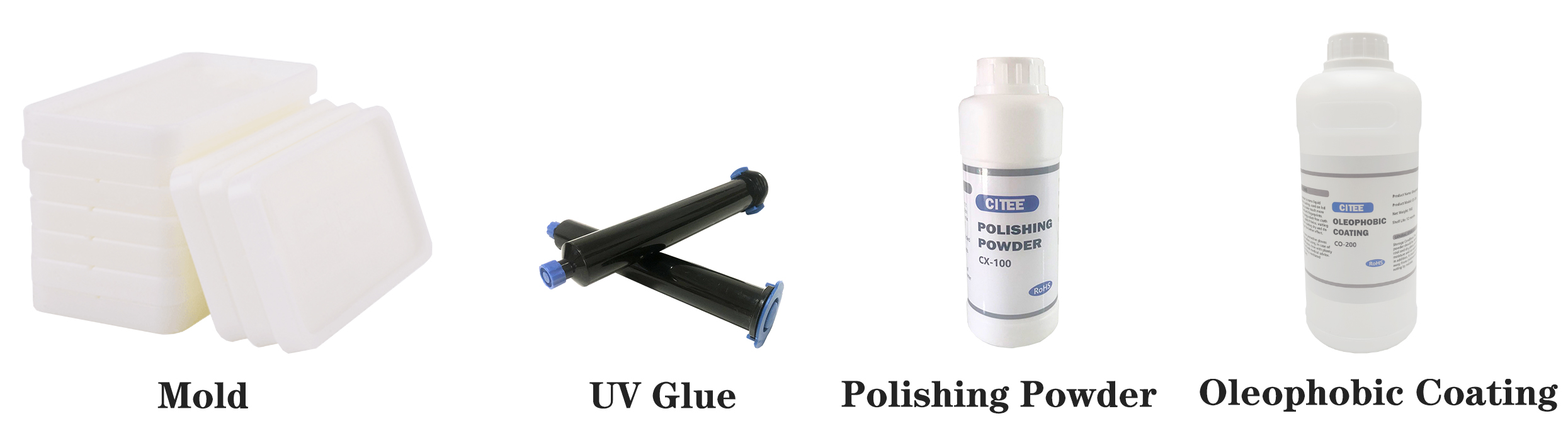
Maximizing the lifecycle of your polishing setup requires a holistic approach to material selection. The interaction between the abrasive slurry, the polishing blanket, and the final protective coating determines the efficiency of the entire station.
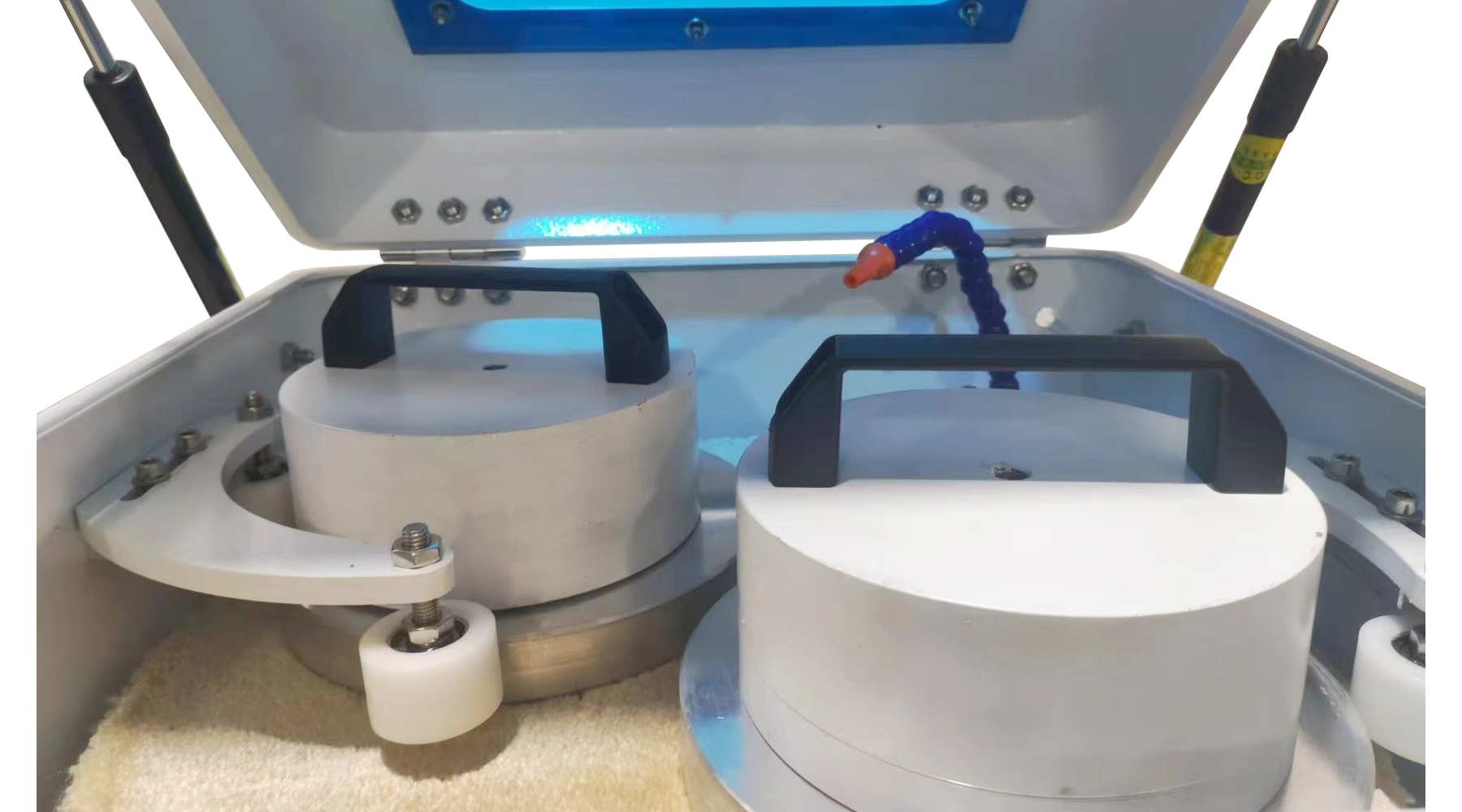
To maintain optimal cutting speed and surface finish, facilities should utilize high-purity cerium oxide polishing powder formulated for consistent particle distribution. This ensures the abrasive works efficiently without degrading the machine’s rubber rollers. Equally important is the condition of the replacement polishing blanket. A worn or improperly tensioned wool blanket will fail to distribute the slurry evenly, leading to localized over-polishing and optical distortion.
Once the surface is perfectly leveled, applying a high-quality AR oleophobic anti-fingerprint coating liquid restores the factory-original tactile feel. In the B2B wholesale market, buyers inspect screens under harsh lighting. A flawless surface without the factory-original oleophobic layer will immediately show fingerprints and smudges during inspection, leading to downgrades in grading. Applying a premium AR coating ensures the screen passes the most stringent visual QC checks, securing the highest possible wholesale tier.
Selection Checklist for High-Yield Refurbishment
| Evaluation Metric | Premium Consumable Standard | Impact on Unit Economics |
|---|---|---|
| Abrasive Purity | 99.9% pure, uniformly milled cerium oxide | Eliminates secondary micro-scratches, reducing rework scrap by up to 15%. |
| Blanket Density | High-density, uniform wool fiber construction | Maintains consistent slurry distribution, extending changeover intervals. |
| Coating Durability | Industrial-grade AR oleophobic formulation | Reduces post-polish handling damage, ensuring B2B buyer satisfaction. |
Frequently Asked Questions
Can your polishing consumables and machines fix deep cracks or shattered screens?
No. Our equipment and phone screen polishing consumables are strictly engineered to repair light surface scratches on glass screens. Deeply fractured, cracked, or shattered screens compromise the structural integrity of the glass and require complete panel replacement.
How does switching to premium consumables affect our overall throughput capacity?
Premium consumables maintain their cutting efficiency longer and produce fewer secondary defects. This significantly reduces the time operators spend on rework and quality control inspections, thereby increasing your overall daily throughput capacity and reducing labor cost per unit.
What is the recommended replacement cycle for polishing blankets in a high-volume factory?
Replacement frequency depends on your monthly refurbishment volume and the specific models being processed. However, high-density premium blankets resist compression and wear much better than standard alternatives, extending their usable lifecycle and reducing the frequency of machine stoppages for changeovers.
Why is the purity of cerium oxide critical for B2B screen refurbishment?
Impurities in low-grade cerium oxide contain harder, irregular particles that do not break down during the polishing process. These particles drag across the glass, creating secondary micro-scratches and holograms that ruin the optical clarity and downgrade the unit’s wholesale value.
Optimize Your Unit Economics Today
Ready to optimize your unit economics and reduce your scrap rate? To receive a formal Proforma Invoice (PI) tailored to your operation, please contact our B2B sales team. When reaching out, ensure you provide your company name, monthly refurbishment volume, target quantity, and whether you need matching consumables alongside your equipment. Our engineering team will analyze your throughput requirements and recommend the exact consumable matrix to maximize your ROI.
No. Our equipment and phone screen polishing consumables are strictly engineered to repair light surface scratches on glass screens. Deeply fractured, cracked, or shattered screens compromise the structural integrity of the glass and require complete panel replacement.
Premium consumables maintain their cutting efficiency longer and produce fewer secondary defects. This significantly reduces the time operators spend on rework and quality control inspections, thereby increasing your overall daily throughput capacity and reducing labor cost per unit.
Replacement frequency depends on your monthly refurbishment volume and the specific models being processed. However, high-density premium blankets resist compression and wear much better than standard alternatives, extending their usable lifecycle and reducing the frequency of machine stoppages for changeovers.
Impurities in low-grade cerium oxide contain harder, irregular particles that do not break down during the polishing process. These particles drag across the glass, creating secondary micro-scratches and holograms that ruin the optical clarity and downgrade the unit’s wholesale value.
