
Optimizing Your Consumables Reorder Point Stock Level Refurb Business Operations
Managing inventory efficiently is critical for any high-volume screen refurbishment facility. Establishing the optimal consumables reorder point stock level refurb business ensures that your production line never halts due to missing supplies, while preventing excess capital from being tied up in warehouse stock. For factory owners and wholesale repair operators, balancing these inventory metrics directly impacts throughput capacity and overall unit cost reduction. By strategically tracking your materials, you can maintain a lean operation that maximizes ROI on every device processed.
Why the consumables reorder point stock level refurb business Matters
In the industrial refurbishment sector, machine downtime is the primary enemy of profitability. When a polishing line stops because a critical material is out of stock, the financial impact extends beyond the cost of the material itself. You lose throughput capacity, delay order fulfillment, and increase your effective scrap rate due to production bottlenecks. Conversely, over-ordering ties up working capital and risks material degradation over time.

Establishing a precise reorder threshold allows facility managers to automate procurement, ensuring a continuous flow of operations. It is important to remember that our polishing technology is strictly engineered to remove light surface scratches on glass screens. It cannot fix deep cracks, shattered glass, or structural fractures. Attempting to process deeply damaged units will not only fail to yield a sellable product but will also prematurely degrade your consumables, skewing your inventory data and increasing your unit cost. Therefore, accurate inventory management is specifically tailored to support the workflow of surface-level scratch removal. For a comprehensive breakdown of how these materials affect your bottom line, review our detailed guide on Polishing Consumables & Operating Cost.
Calculating Your Ideal Reorder Thresholds
To maintain an efficient consumables reorder point stock level refurb business, operators must move away from guesswork and adopt data-driven procurement formulas. The standard industrial formula for calculating a reorder point is:
Reorder Point = (Average Daily Usage × Supplier Lead Time) + Safety Stock
Average Daily Usage is calculated by dividing your total monthly consumable consumption by the number of operating days. Supplier Lead Time is the exact number of days it takes for your order to arrive after the PI is confirmed. Safety Stock is a buffer quantity designed to protect against unexpected demand surges or minor shipping delays. For instance, during post-holiday periods, the influx of damaged devices increases, requiring a temporary adjustment to your safety stock parameters.
By applying this formula to each specific SKU, facility managers can set automated alerts in their ERP or inventory management software. This ensures that purchase orders are generated exactly when needed, optimizing cash flow and warehouse space.
Essential Items to Track in Your Inventory System
Not all consumables degrade at the same rate, and tracking them requires specific operational metrics. Below are the core materials required for surface scratch removal and how to track their lifecycle. Proper storage of these consumables is equally critical. Cerium oxide must be kept in a dry, climate-controlled environment to prevent clumping, which can clog dispensing systems and ruin a polishing batch. Similarly, wool blankets should be stored flat or hung to maintain their structural integrity before deployment.
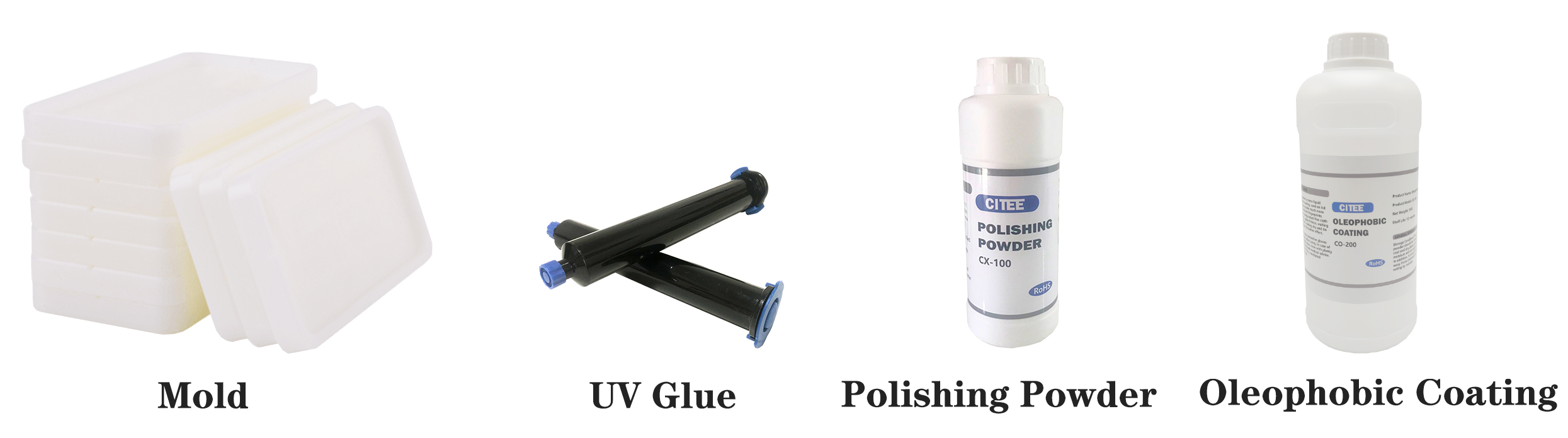
- Polishing Powder: This is your highest-frequency consumable. Usage is directly proportional to the number of devices processed and the severity of the light surface scratches. When procuring your cerium oxide polishing powder 5KG bags, track the exact gram weight used per batch to calculate your precise daily consumption rate.
- Polishing Blankets: The physical medium that transfers the abrasive action to the glass. Blankets do not need replacement every cycle, but their effectiveness degrades as the fibers compress and wear down. Track the total number of polishing cycles per blanket. When you notice a drop in throughput or finish quality, it is time to deploy a replacement wool polishing blanket.
- Rubber Rollers: These components maintain the precise pressure distribution required for uniform scratch removal across the glass surface. Over time, rubber hardens or develops flat spots, leading to uneven polishing. Monitor the operational hours of your rollers and schedule proactive swaps with replacement rubber rollers before quality issues arise.
Selection Checklist for Consumable Procurement
When evaluating suppliers for your ongoing repurchase needs, use the following optimization checklist to ensure you are maximizing your ROI:
Consumable Procurement Checklist:
• Yield Consistency: Does the supplier provide consistent particle size distribution for the powder to ensure uniform scratch removal?
• Lifecycle Transparency: Are the blankets and rollers rated for a specific number of cycles or operational hours?
• Batch Traceability: Can the supplier provide batch numbers to track performance variations over time?
• Scrap Rate Impact: Does the consumable quality directly correlate with a lower scrap rate for light surface scratches?
• Supply Chain Reliability: Does the supplier have a proven track record of fulfilling formal PIs on time to maintain your stock levels?
Conclusion
Optimizing your consumables reorder point stock level refurb business is not just about buying materials; it is about engineering a predictable, high-yield production environment. By accurately tracking your daily usage, understanding the lifecycle of your tooling, and strictly limiting your intake to devices with light surface scratches, you protect your margins and maximize throughput.
To discuss your specific procurement needs and request a formal Proforma Invoice (PI), please reach out to our B2B sales team. When contacting us, please provide your company name, monthly refurbishment volume, target quantity, and whether you need matching consumables. Our team will analyze your throughput requirements and provide a tailored supply strategy.
No. Our technology is strictly designed to remove light surface scratches on glass screens. It cannot fix deep cracks, shattered glass, or structural fractures.
Track the exact gram weight of powder used per batch and multiply it by the number of batches run per day. This provides your average daily usage, which is then factored into your reorder point formula alongside lead time and safety stock.
A noticeable drop in polishing efficiency, an increase in cycle time to achieve the desired finish, or visible thinning and tearing of the wool fibers indicates it is time to deploy a replacement blanket.
Cerium oxide must be kept in a dry, climate-controlled environment to prevent moisture absorption and clumping. Clumped powder can clog dispensing systems and result in an uneven polishing finish.