
Optimizing the Cerium Oxide Polishing Powder for Phone Screen Mixing Ratio to Maximize Refurbishment ROI
For high-volume used phone wholesalers and repair factory owners, achieving the perfect cerium oxide polishing powder for phone screen mixing ratio is critical for maintaining profit margins. When processing thousands of units, minor inefficiencies in consumable usage directly inflate unit costs and reduce overall throughput capacity. This guide outlines the precise parameters required to optimize your slurry consistency, ensuring maximum yield on light surface scratches while strictly avoiding deep structural damage.
Understanding the Cerium Oxide Polishing Powder for Phone Screen Mixing Ratio
In industrial phone refurbishment, the slurry consistency dictates both the mechanical action and the chemical interaction on the glass surface. The correct cerium oxide polishing powder for phone screen mixing ratio ensures that the abrasive particles are evenly suspended, providing uniform cutting action without inducing micro-fractures. It is imperative to state clearly: this polishing process is designed exclusively to remove light surface scratches. Polishing CANNOT fix deep cracks, deeply fractured glass, or shattered screens — only surface-level scratches can be remediated. Attempting to polish deeply damaged glass will result in catastrophic failure of the screen and void any warranty.
For facilities running initial calibration tests or smaller batch refurbishments, utilizing our cerium oxide polishing powder 500g bottle allows for precise measurement and zero waste during the prototyping phase.
Formulating the Slurry for Maximum Surface Scratch Removal
Achieving the optimal viscosity requires strict adherence to weight-based measurements rather than volume-based approximations. The industry-standard starting point for mobile device glass is a 1:3 ratio of cerium oxide powder to deionized water by weight. Deionized water is mandatory; tap water contains minerals that can crystallize under friction, creating secondary scratches and degrading the polishing pad’s lifespan.
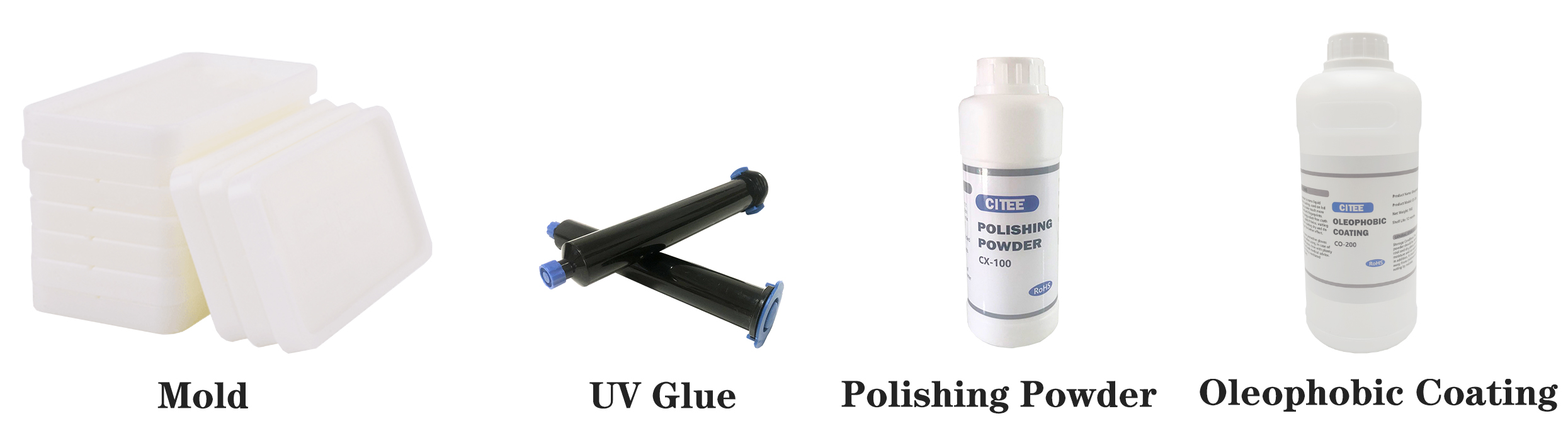
Ambient temperature in the factory floor also plays a critical role in slurry stability. In colder environments, the water’s viscosity increases, which can cause the cerium oxide particles to settle faster if the slurry is not continuously agitated. Factory owners must implement mechanical stirrers in their mixing vats to maintain a homogeneous suspension. Furthermore, the lifecycle of your polishing pads is intrinsically linked to the slurry concentration. A ratio that is too rich in powder will accelerate the wear rate of the polyurethane or felt pads, increasing your consumables repurchase cost. By maintaining the exact 1:3 ratio, you extend pad life by up to 30%, directly improving your ROI.
When scaling up to continuous production, the mixing ratio must remain consistent across every batch to ensure predictable cycle times. For large-scale factory operations requiring continuous slurry mixing and automated dispensing, bulk procurement is essential to maintain uninterrupted production lines. Our cerium oxide polishing powder 5KG bag is specifically packaged to integrate seamlessly into high-volume manufacturing environments, significantly lowering the per-unit consumable cost compared to smaller packaging.
Equipment Calibration and Throughput Optimization
The mixing ratio is only one variable in the refurbishment equation. The effectiveness of the slurry is directly tied to your machine’s spindle speed, downward pressure, and the durometer of the polishing pad. If the cerium oxide polishing powder for phone screen mixing ratio is optimized but the machine parameters are misaligned, you will still experience high scrap rates.
Let’s discuss the transition from manual to automated mixing. Small repair shops often mix slurry by hand, which introduces human error and batch-to-batch inconsistency. As a used phone wholesaler scaling to 10,000 units a month, manual mixing becomes a bottleneck. Automated slurry dispensers ensure that the ratio is maintained with 100% precision. This automation not only guarantees uniform scratch removal across every device but also allows for predictive maintenance scheduling based on exact powder consumption metrics.
To fully understand how your consumable choices and machine settings impact your bottom line, review our comprehensive guide on Polishing Consumables & Operating Cost. Proper calibration ensures that the slurry is utilized efficiently, minimizing the amount of powder that is simply spun off the edge of the glass as waste.
Cost Optimization Formula and Selection Checklist
To accurately calculate the true cost per polished unit, factory managers must account for slurry consumption, pad wear, and machine depreciation. Use the following optimization formula to evaluate your current process efficiency:
Unit Cost Formula:
Total Slurry Cost per Batch = (Weight of Powder × Cost per kg) + (Weight of Water × Cost per L)
Units Polished per Batch = Total Batch Volume / Volume Consumed per Unit
Consumable Cost per Unit = Total Slurry Cost per Batch / Units Polished per Batch
Target: Reduce consumable cost per unit by 15% through precise ratio adherence and automated slurry agitation.
Additionally, utilize this operational selection checklist to audit your refurbishment line:
| Operational Phase | Key Metric to Monitor | Impact on ROI |
|---|---|---|
| Slurry Preparation | Powder-to-Water Weight Ratio | Prevents pad degradation and secondary scratching |
| Machine Operation | Spindle RPM and Downward Pressure | Optimizes dwell time and throughput capacity |
| Post-Polishing | Ultrasonic Cleaning Efficiency | Reduces rejection rate due to residue |
| Consumables Management | Pad Replacement Frequency | Directly lowers ongoing consumables repurchase cost |
Scaling Your Refurbishment Operations
Consistency in the cerium oxide polishing powder for phone screen mixing ratio is the foundation of a scalable B2B refurbishment business. When your process is standardized, you can confidently take on larger wholesale contracts, knowing that your scrap rates are minimized and your unit economics are protected.
Ready to optimize your production line and reduce your consumable repurchase costs? Contact CITEE Industrial today. To receive a formal Proforma Invoice (PI) and tailored operational advice, please provide your company name, monthly refurbishment volume, target quantity, and whether you need matching consumables such as specialized polishing pads and cleaning agents.
A mixture that is too thick increases pad friction and generates excessive heat, which can damage the underlying LCD matrix and accelerate polishing pad wear, increasing your consumables repurchase cost.
No. Polishing CANNOT fix deep cracks or shattered glass — it is strictly designed to remove light surface scratches. Deeply fractured screens must be replaced.
Tap water contains minerals that can crystallize under friction, creating secondary scratches and degrading the polishing pad’s lifespan. Deionized water ensures a clean, consistent slurry.
Procuring larger volumes, such as 5KG bags, significantly lowers the per-unit consumable cost and ensures uninterrupted production lines for high-volume refurbishment operations.