
Managing the Polishing Machine Noise Footprint in a Small Workshop Environment
When scaling a mobile device refurbishment operation, facility managers often overlook the acoustic environment. Evaluating the polishing machine noise footprint small workshop owners face is critical for maintaining operator efficiency and meeting local commercial zoning regulations. At CITEE Industrial, we design equipment that balances high throughput with minimal acoustic disruption, ensuring your facility remains productive without compromising workplace safety or neighbor relations.
Understanding the Polishing Machine Noise Footprint Small Workshop Owners Must Consider
In high-density commercial zones, acoustic output is not just a comfort issue; it is a regulatory and operational constraint. Excessive noise leads to accelerated operator fatigue, increased error rates during delicate refurbishment tasks, and potential violations of municipal noise ordinances. For independent repair shops and used phone wholesalers operating in confined spaces, the acoustic profile of your machinery directly impacts your daily throughput capacity.
Traditional industrial polishing equipment often relies on high-RPM motors without adequate sound dampening, creating a harsh working environment. Modern B2B refurbishment requires a shift toward precision-engineered desktop units that prioritize acoustic attenuation. By minimizing the polishing machine noise footprint small workshop facilities experience, you protect your workforce’s hearing, reduce turnover, and maintain a professional environment for B2B clients visiting your facility.
Surface Scratch Repair: Maximizing ROI Without Heavy Machinery
It is vital to clarify the mechanical limits of our technology to ensure accurate yield projections. Our polishing systems are strictly engineered to remove light surface scratches and restore optical clarity to glass screens. Polishing CANNOT fix deep cracks, deeply fractured, or shattered glass — it only addresses surface-level defects.
Attempting to repair structural glass damage with polishing compounds is a fundamental misunderstanding of the technology that leads to ruined inventory. By strictly categorizing incoming devices and routing only surface-scratched units to the polishing station, wholesalers can dramatically reduce their scrap rate. Instead of writing off a device with minor cosmetic defects as a total loss, or paying high unit costs for a full LCD/OLED assembly replacement, you recover the asset’s margin through low-cost consumable polishing. This targeted approach significantly lowers your unit cost and maximizes the ROI of your refurbishment line.
Selecting the Right Equipment for Your Throughput Needs
Choosing the correct station count is critical for balancing capital expenditure with floor space constraints. For a comprehensive overview of our technical specifications, we recommend reviewing our Screen Polishing Machines Buying Guide.
For independent repair shops handling moderate daily volumes, the CPM-001 single-station screen polishing machine offers a highly compact, low-noise solution. Its optimized motor housing ensures the polishing machine noise footprint small workshop environments require remains well within acceptable limits, making it ideal for shared commercial spaces.
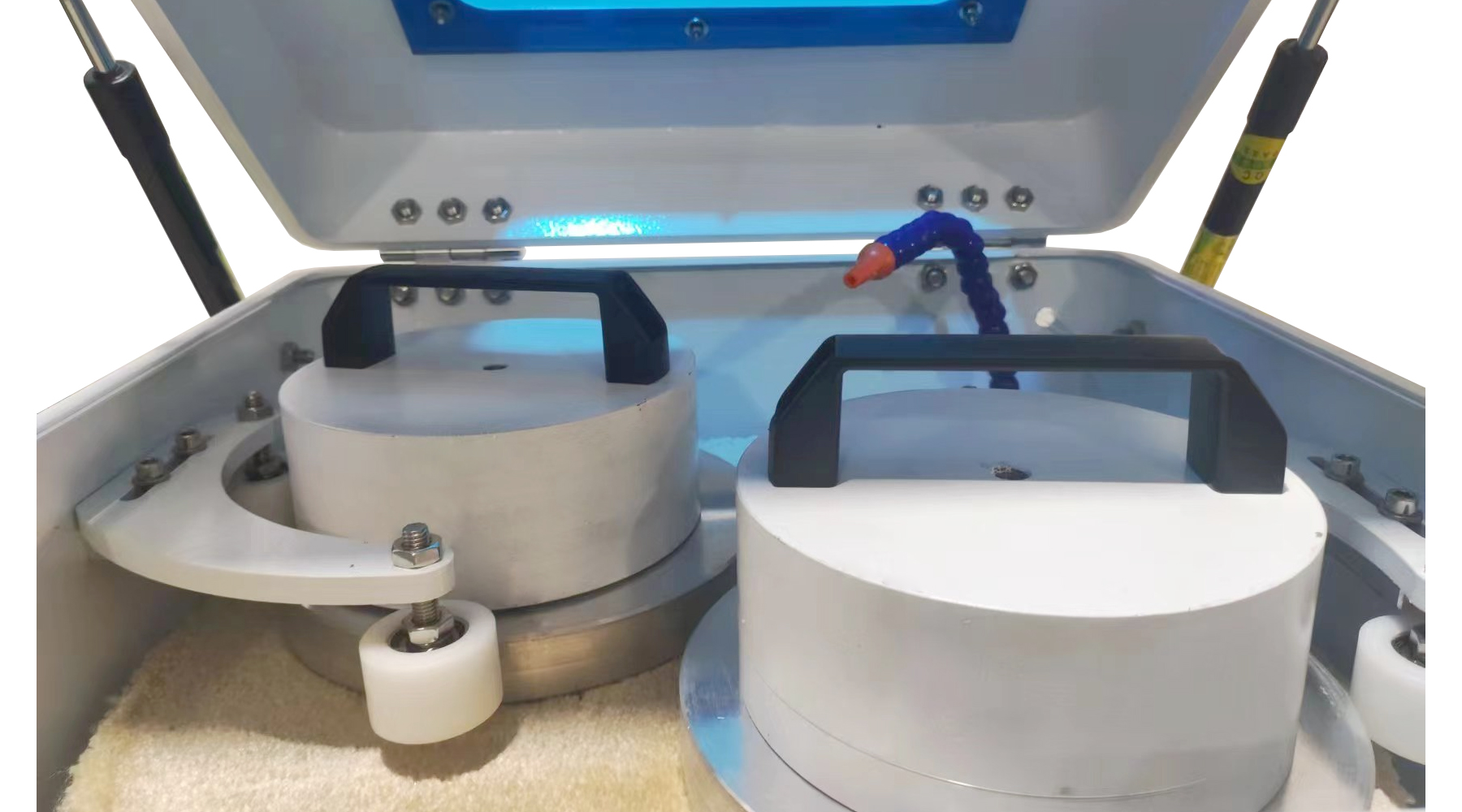
For higher-volume used phone wholesalers, the CPM-002 dual-station desktop machine doubles your throughput capacity without doubling your floor space. The dual-station design allows two technicians to operate simultaneously, significantly increasing daily yield while maintaining a centralized, noise-dampened footprint.

Cost and Optimization Formula for Workshop Upgrades
To justify the capital expenditure of upgrading your refurbishment line, facility managers must calculate the true operational savings. Use the following optimization formula to evaluate your potential ROI:
Refurbishment ROI Formula:
(Average Cost of Replacement Screen × Monthly Scrap Volume) – (Monthly Consumables Repurchase Cost + Operator Labor Cost) = Net Monthly Margin Recovered
By integrating CITEE’s low-noise polishing solutions, you also reduce indirect costs associated with operator fatigue and facility compliance upgrades. Tracking your consumables repurchase cost is essential; our machines are designed to optimize compound and pad usage, ensuring your operational expenditure remains predictable and low.
Conclusion
Ultimately, optimizing the polishing machine noise footprint small workshop managers deal with ensures a sustainable, compliant, and highly profitable operation. By focusing strictly on surface-level scratch removal and selecting the right station configuration, you can transform cosmetic defects into recoverable margin.
To request a formal Proforma Invoice and discuss the best configuration for your facility, please contact our B2B sales team. Be sure to provide your company name, monthly refurbishment volume, target quantity, and whether you need matching consumables so we can tailor a precise proposal for your operation.
Frequently Asked Questions
Q: Can your polishing machines fix shattered or deeply cracked screens?
A: No. Our machines are strictly designed to repair light surface scratches. Polishing cannot fix deep cracks or shattered glass; it only addresses surface-level defects.
Q: How does the noise level impact a small workshop’s daily operations?
A: Lower noise reduces operator fatigue, minimizes errors during precision work, and ensures compliance with commercial zoning regulations in shared or dense urban facilities.
Q: What is the typical throughput capacity for the CPM-002?
A: The dual-station design of the CPM-002 allows two technicians to operate simultaneously, effectively doubling your daily surface scratch repair throughput compared to a single-station setup.
Q: How do I calculate the ROI of upgrading my refurbishment line?
A: Calculate the reduction in scrap rates and the savings from avoiding full screen replacements, then subtract the monthly consumables repurchase cost and labor to find your net margin recovered.
No. Our machines are strictly designed to repair light surface scratches. Polishing cannot fix deep cracks or shattered glass; it only addresses surface-level defects.
Lower noise reduces operator fatigue, minimizes errors during precision work, and ensures compliance with commercial zoning regulations in shared or dense urban facilities.
The dual-station design of the CPM-002 allows two technicians to operate simultaneously, effectively doubling your daily surface scratch repair throughput compared to a single-station setup.
Calculate the reduction in scrap rates and the savings from avoiding full screen replacements, then subtract the monthly consumables repurchase cost and labor to find your net margin recovered.