
Maximizing Factory ROI with Apple Watch and iPad Scratch Polishing Setup Molds
For used device wholesalers and refurbishment factories, maximizing yield on premium inventory is critical to maintaining profit margins. Implementing precise apple watch and ipad scratch polishing setup molds is the key to transforming scratched inventory into high-grade assets. By securing devices perfectly during the polishing process, factories can significantly reduce unit costs and eliminate manual handling errors that lead to secondary damage.
The Economics of Surface Scratch Removal
In the B2B device refurbishment sector, the difference between a “Grade B” scratched device and a “Grade A” polished device can represent a massive margin swing. Premium devices like the iPad Pro and Apple Watch Ultra command high resale values, but they are highly susceptible to micro-scratches from daily enterprise or consumer use.
However, facility managers must understand a fundamental limitation of this technology: polishing is strictly designed to remove light surface scratches. It cannot fix deep cracks, shattered glass, or deeply fractured screens. Attempting to polish a compromised structural panel will only result in total device failure. When applied correctly to light surface blemishes, however, the ROI is substantial. By keeping devices in the polishing pipeline rather than the scrap bin, factories drastically reduce their overall scrap rate and improve net yield per batch.
How Apple Watch and iPad Scratch Polishing Setup Molds Improve Throughput
Standard phone jigs are insufficient for the diverse form factors of modern premium devices. Apple Watches feature tightly curved glass edges and ultra-compact dimensions, while iPads present the opposite challenge: large, heavy panels that are prone to slipping if not perfectly secured. This is where specialized apple watch and ipad scratch polishing setup molds become indispensable.
These precision-machined jigs lock the device bezel and screen edges into place, ensuring that the polishing head applies perfectly even pressure across the entire glass surface. This eliminates the need for operators to manually hold or adjust the device, directly increasing throughput capacity and ensuring a consistent, uniform finish on every unit. The rigid hold prevents the device from shifting under the rotational force of the polishing head, which is critical for maintaining the structural integrity of the glass during the abrasion process.
Scaling Your Operation: Matching Equipment to Volume
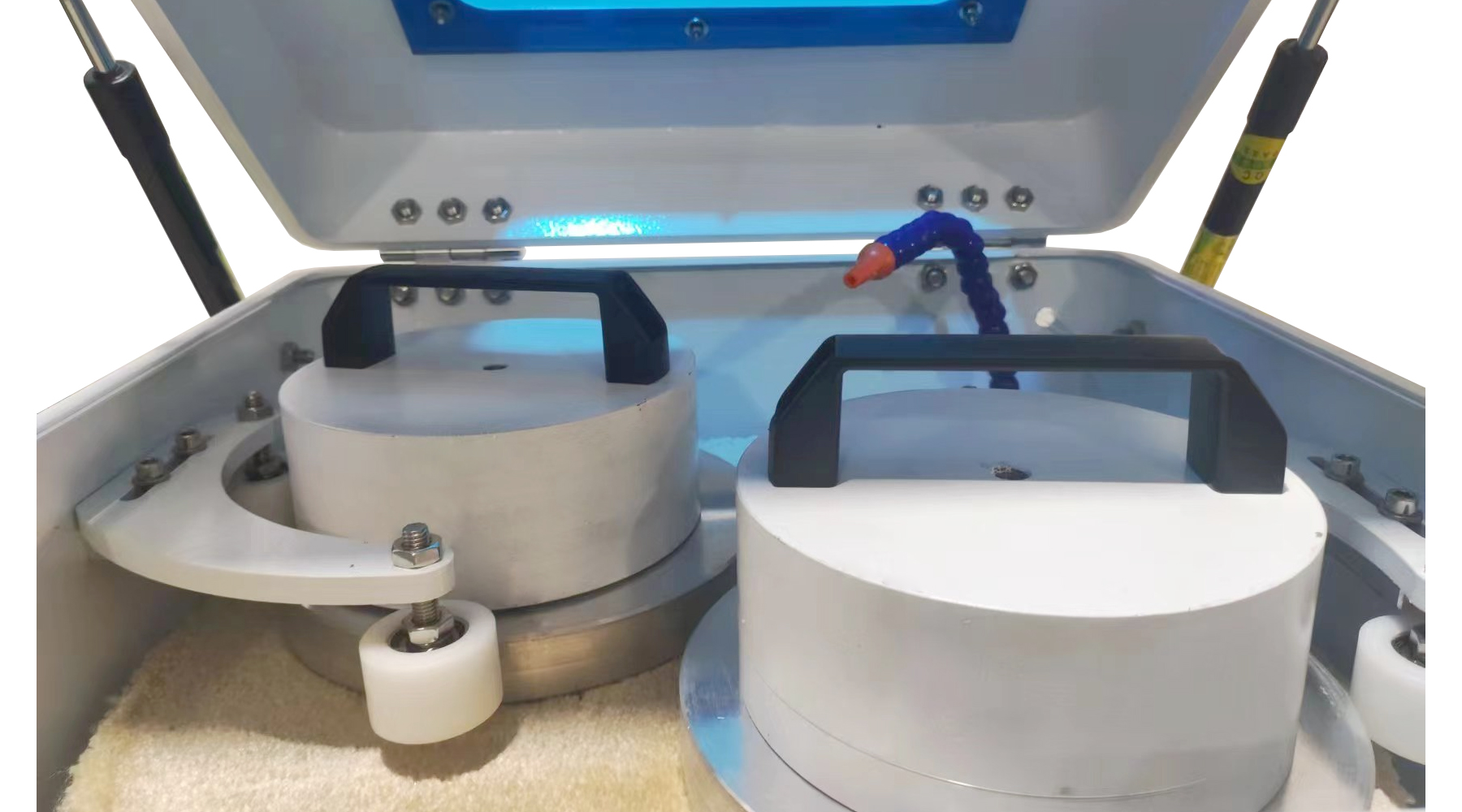
To fully leverage these specialized molds, facilities must pair them with the right polishing machinery. For mid-sized repair shops and regional wholesalers, the CPM-004 or CPM-008 provides an excellent balance of footprint and output. These 4- and 8-station machines come equipped with a built-in compressor, streamlining the setup and reducing the need for external air lines.
For high-volume factories processing thousands of units monthly, the CPM-024 is the industry standard. This 24-station high-capacity machine is engineered for continuous industrial operation, maximizing daily output while maintaining strict quality control. To ensure exact device alignment across any of these machines, facilities should invest in model-specific holding molds tailored to the exact dimensions of the devices being processed. For a comprehensive overview of equipment selection and integration, refer to our screen polishing machine guide.

Managing Consumables and Operational Costs
A critical component of B2B refurbishment is managing the consumables repurchase cost. Polishing pads, abrasive compounds, and cooling lubricants are recurring expenses that can eat into margins if not managed properly. When devices are not properly secured in a mold, operators tend to apply uneven pressure, which accelerates the wear and tear on polishing pads and wastes abrasive compounds.
By utilizing precision molds, the machine’s automated pressure system distributes the consumables evenly. This not only guarantees a flawless surface finish but also extends the lifespan of your polishing pads, directly lowering your unit cost reduction metrics. Proper mold alignment ensures that the slurry is applied uniformly, preventing dry spots that would otherwise ruin the pad and the screen.
Selection Checklist for Refurbishment Facilities
| Operational Requirement | Recommended Solution | Key Benefit |
|---|---|---|
| Mid-volume processing (500-2000 units/month) | CPM-004 / CPM-008 (4/8 Stations) | Built-in compressor, compact footprint |
| High-volume industrial processing (5000+ units/month) | CPM-024 (24 Stations) | Maximum throughput capacity, continuous operation |
| Curved glass and large panel alignment | Model-specific holding molds | Eliminates secondary damage, ensures even pressure |
| Consumables optimization | Precision mold integration | Reduces consumables repurchase cost, extends pad life |
Conclusion and Next Steps
Integrating the right apple watch and ipad scratch polishing setup molds into your production line is a strategic move that directly impacts your bottom line. By automating the holding process, you protect your devices, optimize your consumables, and scale your throughput capacity without adding proportional labor costs. Remember, this process is exclusively for light surface scratches and will not repair deep cracks or shattered glass.
To get a formal Proforma Invoice (PI) tailored to your specific operational needs, please contact our sales team. When requesting your PI, be sure to provide your company name, monthly refurbishment volume, target quantity, and whether you need matching consumables included in the quote.
No. Polishing is strictly designed for light surface scratches only. It cannot fix deep cracks, shattered glass, or deeply fractured screens. Attempting to polish structurally compromised glass will result in device failure.
Apple Watches have tightly curved edges and small form factors, while iPads are large and heavy. Specific molds secure them perfectly to prevent slipping, ensure even pressure distribution, and avoid secondary damage during the automated polishing cycle.
Properly secured devices ensure even distribution of polishing compounds and slurry. This prevents uneven wear on polishing pads and reduces the overall consumption rate of abrasive materials, directly lowering your recurring consumables costs.
To receive an accurate PI, you must provide your company name, monthly refurbishment volume, target quantity for the equipment, and specify whether you need matching consumables included in the quote.