
Maximizing Refurbishment ROI Through Automatic Pressure Control Screen Polishing Machine Consistency
In the high-volume mobile refurbishment industry, minimizing scrap rates is critical for profitability. Achieving a uniform surface finish across thousands of units requires precise engineering. This is where automatic pressure control screen polishing machine consistency becomes a vital metric for factory owners and used phone wholesalers. When pressure fluctuates during the polishing cycle, yield drops and consumable waste increases. By maintaining exact pressure parameters, B2B operations can ensure every light surface scratch is removed efficiently, directly impacting your bottom line through reduced unit costs and maximized throughput capacity.
Why Automatic Pressure Control Screen Polishing Machine Consistency Matters for B2B
In commercial refurbishment, uniformity is the difference between profit and loss. Manual or poorly calibrated machines often suffer from pressure drops or spikes, resulting in uneven material removal. This inconsistency leads to two major issues: under-polished units that must be reworked (doubling labor costs) and over-polished units that fail quality control (increasing the scrap rate).
It is crucial to explicitly state that polishing CANNOT fix deep cracks or shattered glass — only surface-level scratches. The goal of automated pressure systems is to apply a precise, unvarying force to remove light surface scratches without altering the structural integrity or optical clarity of the glass. When a machine maintains strict automatic pressure control screen polishing machine consistency, operators can predict the exact material removal rate per cycle. This predictability allows factory managers to calculate precise ROI, optimize labor allocation, and guarantee that every batch meets the strict quality standards required by downstream B2B buyers.
For a complete overview of how these systems integrate into your production line, review our comprehensive Screen Polishing Machines Buying Guide.
Selecting the Right Equipment for Your Refurbishment Volume
Choosing the correct machine architecture depends entirely on your monthly refurbishment volume and facility footprint. CITEE Industrial designs equipment specifically for B2B scalability, ensuring that throughput capacity matches your operational demands.
For large repair shops and mid-sized factories requiring reliable output without external air supply dependencies, the CPM-004/CPM-008 screen polishing machine is the ideal solution. Available in 4-station and 8-station configurations, this unit features a built-in compressor. This integrated design guarantees automatic pressure control screen polishing machine consistency by eliminating the pressure drops commonly associated with long external air hoses, ensuring every station operates at the exact same PSI.
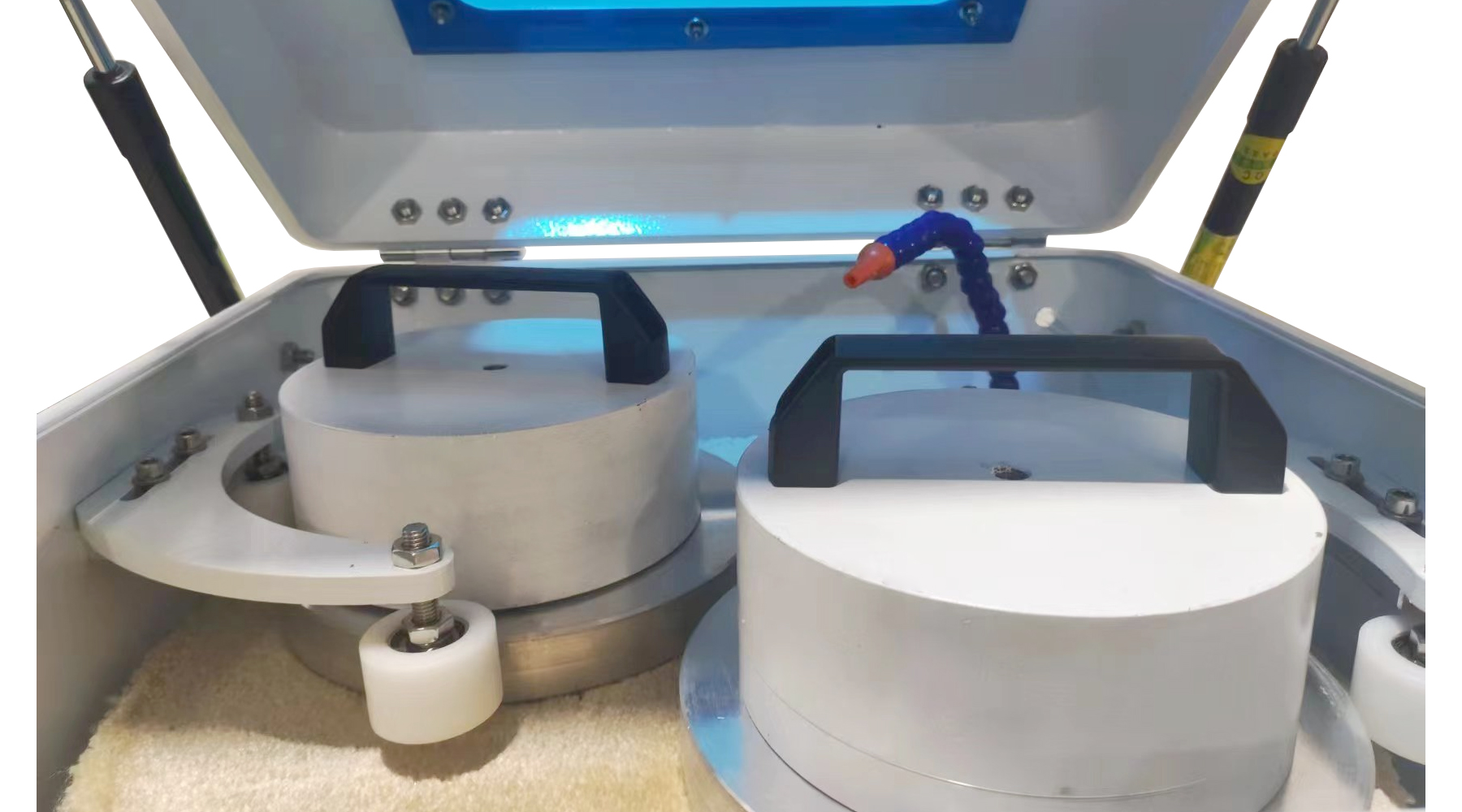
For high-volume refurbishment factories processing tens of thousands of units monthly, throughput is the primary bottleneck. The CPM-016 16-station machine is engineered specifically for these large-scale operations. By doubling the station count of standard models, the CPM-016 drastically reduces the labor-to-unit ratio. Its advanced pneumatic system maintains rigorous automatic pressure control screen polishing machine consistency across all 16 heads simultaneously, ensuring that batch after batch is processed with identical precision.

The Economics of Consumables and Unit Cost Reduction
In B2B refurbishment, the initial capital expenditure is only part of the equation. The true cost driver is the ongoing consumables repurchase cost—specifically, polishing films, compounds, and replacement pads. Inconsistent pressure accelerates consumable wear. If a machine applies uneven force, certain pads degrade faster, requiring premature replacement and inflating your unit cost.
By investing in a system engineered for automatic pressure control screen polishing machine consistency, you extend the lifespan of your consumables. Uniform pressure ensures that polishing films wear down evenly across their entire surface area. This optimization directly reduces your consumables repurchase cost, lowering the overall unit cost of refurbishment and accelerating your return on investment. When you can accurately forecast your consumable usage, you can confidently bid on large wholesale contracts with tighter margins, knowing your operational efficiency protects your profit.
B2B Equipment Selection Checklist
When evaluating machines for your facility, use this checklist to ensure the equipment aligns with your operational and financial goals.
Refurbishment Equipment Selection Checklist:
• Throughput Requirements: Match station count (4, 8, or 16) to your monthly refurbishment volume.
• Pneumatic Stability: Verify the machine features automatic pressure regulation to ensure automatic pressure control screen polishing machine consistency.
• Compressor Integration: Determine if a built-in compressor (like the CPM-004/008) is necessary, or if your facility’s central air system is sufficient.
• Consumable Compatibility: Ensure the machine is optimized for standard B2B polishing films to minimize repurchase costs.
• Damage Limitations: Confirm operator training emphasizes that the machine only repairs light surface scratches and cannot fix deep cracks or shattered glass.
Conclusion and Next Steps
Achieving high yield rates in mobile refurbishment relies on eliminating variables. By prioritizing automatic pressure control screen polishing machine consistency, factory owners and wholesalers can drastically reduce scrap rates, extend consumable life, and maximize throughput capacity. Remember, this technology is strictly for removing light surface scratches; it cannot fix deep cracks or shattered glass.
To understand how CITEE Industrial equipment can optimize your specific production line, we invite you to request a formal PI. Please provide your company name, monthly refurbishment volume, target quantity, and whether you need matching consumables. Our engineering team will analyze your requirements and provide a tailored proposal.
No. It is critical to understand that polishing CANNOT fix deep cracks or shattered glass — only surface-level scratches. The machine is designed exclusively to remove light surface abrasions and restore optical clarity to intact glass.
Automatic pressure control screen polishing machine consistency ensures that polishing films and pads wear down evenly. Without this consistency, uneven pressure causes localized wear, forcing premature replacement of consumables and increasing your overall unit cost.
To receive an accurate formal PI, please provide your company name, monthly refurbishment volume, target machine quantity, and whether you require matching consumables. We do not publish fixed prices online as configurations vary by B2B operational needs.
The choice depends on your throughput capacity. The CPM-004/008 (4 or 8 stations) with a built-in compressor is ideal for large repair shops. The 16-station CPM-016 is built for high-volume refurbishment factories requiring maximum output and minimal labor-to-unit ratios.