
Choosing the Best Polishing Setups by Business Size for Maximum ROI
Scaling a mobile phone refurbishment operation requires more than just skilled technicians; it demands the right equipment. When evaluating the best polishing setups by business size, factory owners and repair shop managers must balance throughput capacity with unit cost reduction. At CITEE Industrial, we engineer screen polishing machines specifically designed to restore light surface scratches on glass screens, ensuring you maximize ROI without overcapitalizing on unnecessary capacity.
Understanding the Best Polishing Setups by Business Size
In the B2B refurbishment sector, operational efficiency is dictated by your ability to minimize the scrap rate while maximizing daily output. It is critical to understand that our polishing technology is strictly engineered to remove light surface scratches. It cannot fix deep cracks, fractures, or shattered glass. Attempting to polish deeply damaged glass will not yield a sellable product and will only waste consumables.
By aligning your equipment capacity with your actual production volume, you optimize your unit cost reduction. Over-investing in high-capacity machinery for a small shop leads to idle assets, while under-investing in a large factory creates bottlenecks that inflate labor costs. For a complete overview of how our technology integrates into your workflow, review our comprehensive screen polishing machine guide.
Independent Repair Shops: The Single-Station Solution
For independent repair shops and small-scale refurbishers processing limited daily volumes, floor space and initial capital expenditure are primary concerns. The CPM-001 single-station machine is engineered specifically for this tier.
This compact unit allows technicians to efficiently restore light surface scratches on glass screens without requiring a massive facility footprint. By rescuing devices that would otherwise be classified as scrap due to minor cosmetic defects, the CPM-001 immediately improves your profit margins. The single-station design ensures that even operations with lower throughput capacity can achieve a rapid return on investment through consistent unit cost reduction.
Mid-Sized Operations: Multi-Station Throughput
As your business scales, processing dozens of units daily requires a more robust infrastructure. The CPM-004/008 multi-station machine bridges the gap between small shops and massive factories. Available in 4-station and 8-station configurations, this equipment features a built-in compressor, eliminating the need for external air supply infrastructure and reducing operational complexity.
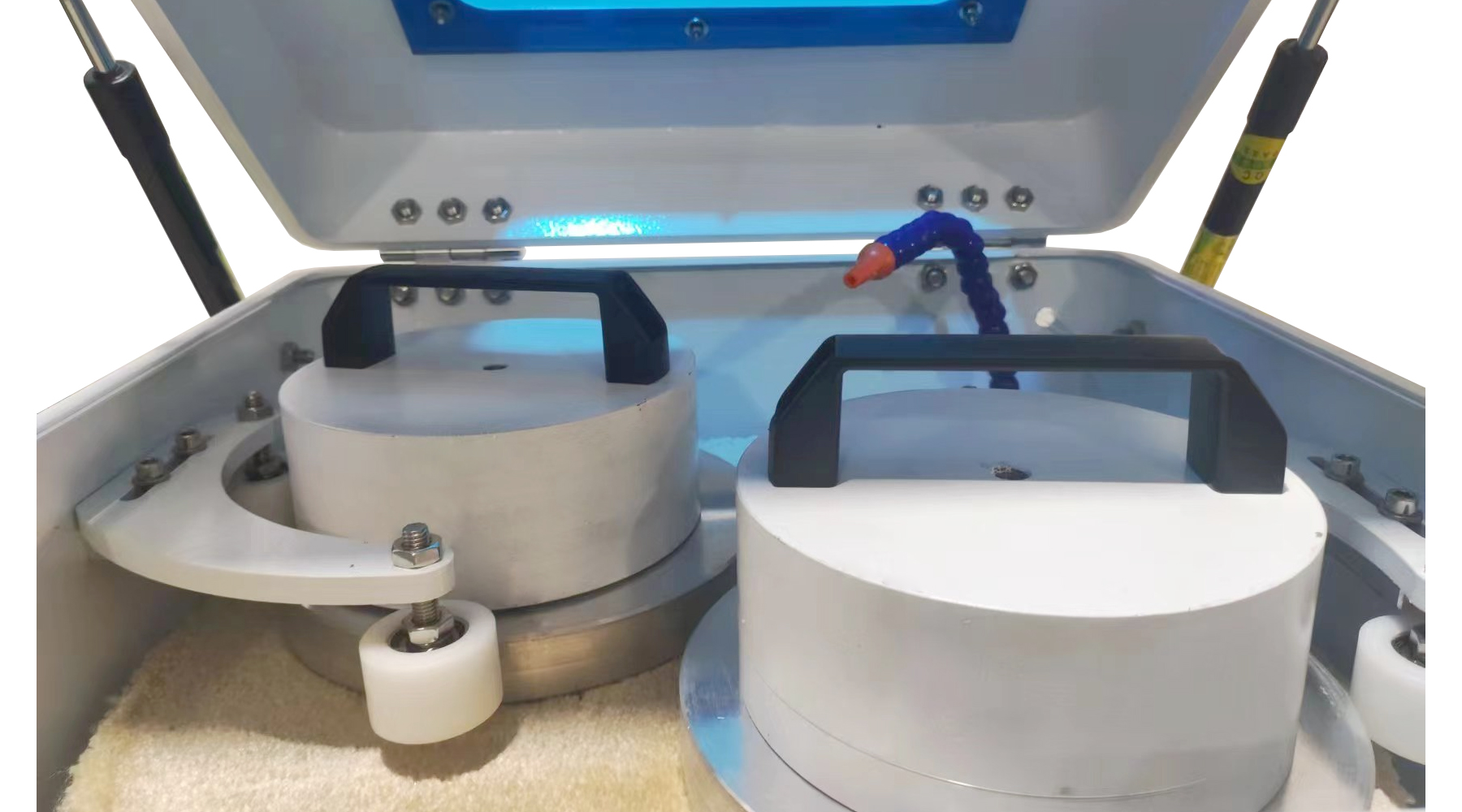
Mid-sized operations benefit immensely from the parallel processing capabilities of the CPM-004/008. This setup significantly increases your throughput capacity, allowing you to handle larger wholesale batches of used phones. Furthermore, the centralized design optimizes your consumables repurchase cost, ensuring that polishing compounds and pads are utilized efficiently across multiple stations simultaneously.
Large Factories: Maximizing High-Volume Capacity
For large-scale factories processing thousands of units monthly, manual handling and single-batch processing are unacceptable. The CPM-024 24-station high-capacity machine is the industry benchmark for high-volume refurbishment.

The CPM-024 is designed to drastically lower the unit cost per refurbished screen. By polishing 24 devices simultaneously, factories can achieve unparalleled throughput capacity. This massive scale ensures that your labor cost per unit drops significantly, directly impacting your bottom line. When dealing with high volumes of light surface scratches, the CPM-024 transforms what would be a high-scrap inventory into a highly profitable product line.
Calculating ROI and Reducing Scrap Rates
To truly understand the value of upgrading your equipment, you must calculate the differential between replacing a screen and polishing it. Full screen replacement incurs the cost of the OEM or aftermarket LCD/OLED panel, plus the labor to disassemble and reassemble the device. Polishing, conversely, only incurs the cost of machine depreciation and minor consumables.
By implementing the correct polishing setup, your scrap rate for cosmetically flawed devices drops to near zero. The ROI is realized not just in the savings on replacement parts, but in the increased inventory turnover rate. To accurately project these savings for your specific operation, we recommend consulting our technical team to analyze your current scrap metrics.
Equipment Selection Checklist
Use the following optimization formula to determine the ideal configuration for your facility:
| Business Size | Monthly Refurb Volume | Recommended Setup | Primary Operational Benefit |
|---|---|---|---|
| Small Shop | < 1,000 units | CPM-001 (1 Station) | Low footprint, fast ROI, minimal capital risk |
| Medium Shop | 1,000 – 5,000 units | CPM-004/008 (4/8 Stations) | Built-in compressor, parallel processing, optimized consumables |
| Large Factory | > 5,000 units | CPM-024 (24 Stations) | Maximum throughput capacity, lowest unit cost per screen |
Conclusion
Selecting the best polishing setups by business size is a critical operational decision that directly impacts your profitability and scalability. By aligning your machine capacity with your actual throughput requirements, you minimize capital expenditure while maximizing unit cost reduction. Remember, our equipment is strictly engineered to remove light surface scratches; it cannot repair deep cracks or shattered glass.
To get a precise quote and request a formal PI, please contact our B2B sales team. When reaching out, please provide your company name, monthly refurbishment volume, target quantity, and whether you need matching consumables. Our engineers will then configure a tailored solution to optimize your refurbishment line.
No. Our machines are strictly designed to polish and remove light surface scratches on glass screens. They cannot fix deep cracks, fractures, or shattered glass. Deeply damaged screens must be replaced.
Evaluate your monthly refurbishment volume and target daily throughput. Small shops benefit from single-station units like the CPM-001, while large factories require 24-station setups like the CPM-024 to minimize scrap rates effectively and maximize ROI.
Yes, polishing requires specific compounds and pads. When requesting a formal PI, please indicate whether you need matching consumables so we can include them in your quotation to optimize your ongoing repurchase costs.
By restoring light surface scratches, devices that would otherwise be downgraded to scrap or sold at a heavy discount are returned to Grade A condition. This directly increases your inventory turnover rate and profit margin per unit.