
The Ultimate B2B Consumables FAQ: Powder, Blanket, Glue, and Coating Optimization
For B2B refurbishment operations, managing consumables repurchase cost is critical to maintaining healthy profit margins. Whether you run a high-volume factory or a specialized repair shop, understanding your consumables FAQ powder blanket glue coating requirements ensures optimal throughput capacity and unit cost reduction. This guide addresses the most frequent operational questions regarding surface scratch removal, helping you minimize scrap rates and maximize ROI on every device processed. Every decision regarding material sourcing directly impacts your bottom line. Please note that our processes are strictly designed to fix light surface scratches on glass screens; polishing cannot fix deep cracks or shattered glass.
Consumables FAQ Powder Blanket Glue Coating Guide
In high-throughput refurbishment environments, the most common questions we receive from factory owners revolve around the lifecycle and replacement intervals of essential materials. To calculate your true unit cost reduction, you must track the degradation rate of every input material. Standardizing your supply chain is the first step toward predictable operational expenses and scalable growth. For a comprehensive breakdown of how these variables impact your bottom line, review our screen polishing machine guide and Polishing Consumables & Operating Cost resource.
The fundamental rule of B2B refurbishment is that consumable efficiency directly dictates your scrap rate. If your abrasive media degrades too quickly, you increase your per-unit cost. If your protective layers fail, you risk post-refurbishment customer returns. By standardizing your intake of high-grade materials, you stabilize your throughput capacity and ensure predictable operational expenses.
Optimizing Your Polishing Powder and Blanket Repurchase Cycle
The physical removal of light surface scratches relies entirely on the mechanical and chemical interaction between your abrasive powder and the polishing pad. Factory managers frequently ask how to extend the life of their polishing pad while maintaining a consistent cut rate. The answer lies in the quality and particle size distribution of your cerium oxide.
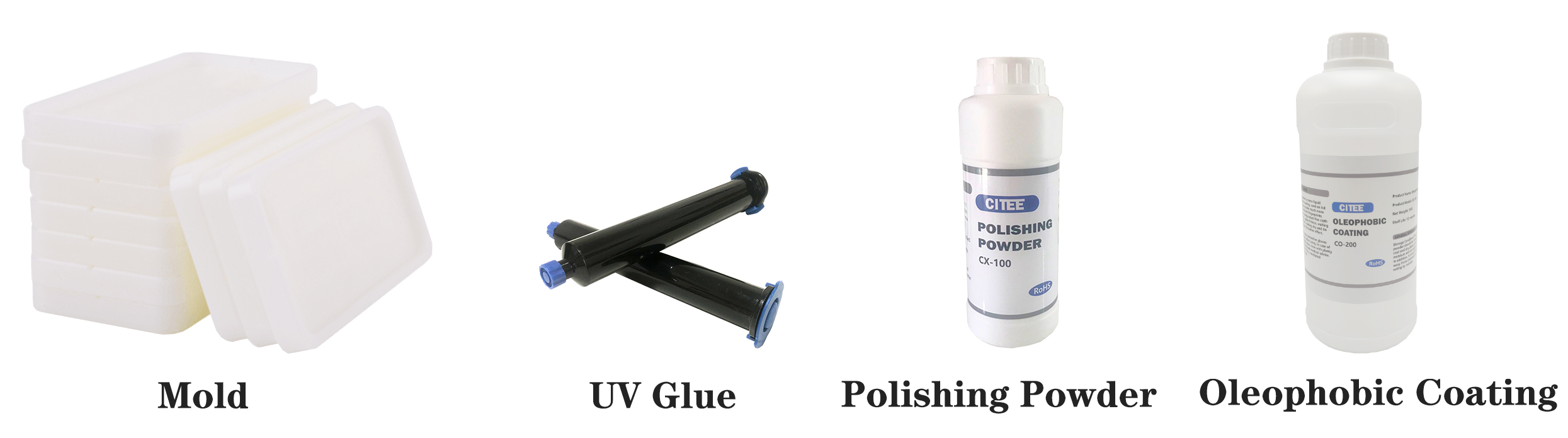
Using a premium cerium oxide polishing powder 5KG bag ensures a uniform particle size that cuts efficiently without causing micro-fractures in the glass. When the powder is of high purity, it requires less mechanical pressure to achieve the desired clarity, which directly reduces the wear and tear on your replacement wool polishing blanket.
When evaluating your consumables repurchase cost, it is vital to look beyond the initial purchase price of a single bag. A cheaper, lower-grade powder might seem cost-effective initially, but it often requires multiple passes to achieve the desired clarity. This not only increases labor costs but also generates excessive heat, which can weaken the glass substrate and increase your overall scrap rate. High-purity cerium oxide cuts cleanly in a single pass, preserving the structural integrity of the screen and ensuring your throughput capacity remains high.
Post-Polishing Protection: Glue and Coating Application
Once the light surface scratches are removed, the glass is vulnerable. The polishing process can compromise the original factory seals and oleophobic layers. B2B buyers must address this immediately to ensure the refurbished device meets market standards.
Re-sealing the device is non-negotiable for maintaining water and dust resistance ratings. Applying a reliable UV waterproof sealing glue 30ml/50ml restores the structural integrity of the screen assembly. This step is crucial for wholesalers who need to guarantee device longevity to their downstream buyers.
For used phone wholesalers, the visual and tactile quality of the refurbished device directly impacts the wholesale price point. A screen that feels rough or lacks water resistance will be downgraded in value. By standardizing the application of UV waterproof sealing glue and AR oleophobic coating, you elevate the perceived value of your inventory. This allows you to command higher margins in the B2B market, directly contributing to your overall ROI.
Following the sealing process, the tactile feel and fingerprint resistance of the glass must be restored. Utilizing a professional-grade AR oleophobic anti-fingerprint coating liquid ensures the refurbished screen matches the premium feel of a brand-new device. This final step drastically reduces the likelihood of returns due to poor user experience, protecting your brand reputation in the wholesale market.

B2B Selection Checklist for Refurbishment Consumables
To help procurement managers and factory owners evaluate their current supply chain, we have compiled a standardized checklist. Use this framework to assess whether your current consumables are optimized for maximum ROI.
| Consumable Category | Key Performance Indicator (KPI) | Optimization Goal |
|---|---|---|
| Cerium Oxide Powder | Cut rate vs. glass haze | Maximize scratch removal without increasing machine pressure |
| Wool Polishing Blanket | Lifecycle screens per unit | Extend pad life by using pure, correctly graded powder |
| Waterproof Sealing Glue | Curing time and seal integrity | Ensure rapid UV curing without compromising screen assembly |
| AR Oleophobic Coating | Contact angle and durability | Achieve factory-level fingerprint resistance to minimize returns |
Conclusion: Scaling Your Refurbishment Operations
Mastering your consumables FAQ powder blanket glue coating strategy is the difference between a profitable, scalable factory and one struggling with high scrap rates. By focusing on light surface scratch repair and utilizing high-grade inputs, you ensure consistent throughput and superior end-product quality. Remember, polishing cannot fix deep cracks or shattered glass; it is exclusively a solution for surface-level refinishing.
To receive a formal Proforma Invoice (PI) tailored to your operational scale, please contact our B2B sales team. When reaching out, kindly provide your company name, monthly refurbishment volume, target quantity, and whether you need matching consumables. Our engineers will analyze your throughput requirements and recommend the optimal material configurations to drive your unit cost reduction and maximize your overall ROI.
No. Our process is strictly designed to fix light surface scratches on glass screens. Polishing cannot fix deep cracks or shattered glass; it is exclusively a solution for surface-level refinishing.
You should monitor the cut rate and surface finish. If you notice an increase in processing time or a hazy finish despite using fresh powder, it indicates the wool fibers are degraded and the replacement wool polishing blanket needs to be swapped to maintain throughput capacity.
Polishing removes the original factory oleophobic layer along with the scratches. Applying an AR oleophobic anti-fingerprint coating liquid restores the smooth tactile feel and water resistance, which is critical for maintaining high wholesale value and minimizing customer returns.
Please contact our B2B sales team and provide your company name, monthly refurbishment volume, target quantity, and whether you need matching consumables. We will then issue a formal Proforma Invoice (PI) tailored to your operational scale.