
How to Choose the Right iPhone Screen Polishing Machine Wholesale Supplier Factory
For refurbishment businesses, partnering with a reliable iphone screen polishing machine wholesale supplier factory is critical to maximizing ROI and reducing unit costs. When dealing with high volumes of used devices, the ability to efficiently restore light surface scratches directly impacts your bottom line. This guide outlines how to evaluate equipment capabilities, optimize your production line, and select the right machinery for your specific throughput requirements.
Why Your Choice of an iphone screen polishing machine wholesale supplier factory Matters
In the competitive B2B refurbishment sector, your equipment partnerships dictate your operational efficiency. Sourcing directly from a manufacturer rather than a third-party distributor eliminates middleman markups, significantly lowering your initial capital expenditure. Furthermore, a direct relationship with a factory ensures you receive priority technical support, immediate access to spare parts, and optimized consumables tailored to your specific machinery.
When you evaluate potential partners, look beyond the initial machine price. Consider the total cost of ownership, which includes the lifespan of the equipment, the energy consumption of the motors, and the ongoing repurchase cost of polishing pads and compounds. A high-quality machine from a dedicated factory will maintain consistent pressure and speed, ensuring a uniform finish that minimizes your scrap rate and maximizes the resale value of every device processed.
Understanding Machine Capabilities: Surface Scratches vs. Deep Damage
Before scaling your production line, it is vital to set accurate expectations regarding what polishing equipment can achieve. These machines are engineered exclusively to remove light surface scratches, micro-abrasions, and minor scuffs from glass screens.
It is critical to state explicitly: polishing CANNOT fix deep cracks, shattered glass, or deeply fractured screens. If a device has sustained impact damage that compromises the structural integrity of the glass, polishing will not resolve the issue. Deep damage requires a full screen replacement. Attempting to polish deeply cracked glass will only result in wasted labor, wasted consumables, and a high probability of further breaking the screen during the process. Proper intake sorting is the first step in optimizing your refurbishment ROI.
Selecting the Right Station Capacity for Your Factory
Throughput capacity is the primary driver of your unit cost reduction. Selecting the correct number of polishing stations ensures your labor costs remain low while meeting your daily volume targets. For a complete overview of specifications, refer to our Screen Polishing Machines Buying Guide.
Medium Volume and Large Repair Shops
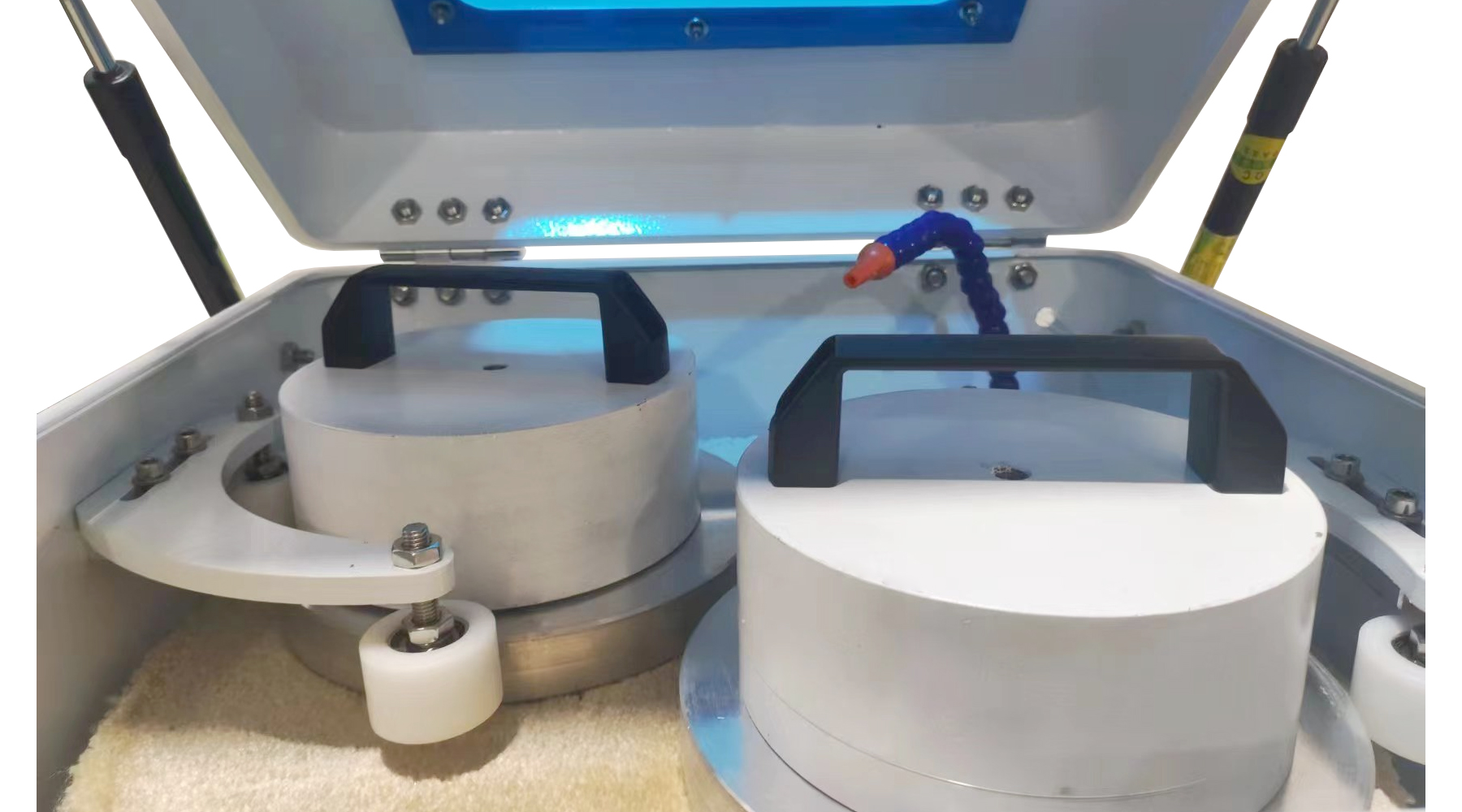
For operations processing moderate daily volumes, the CPM-004 and CPM-008 models are ideal. Available in 4-station and 8-station configurations, these machines feature a built-in compressor, simplifying your factory setup by removing the need for external air supply integration. They offer an excellent balance of footprint and output for growing businesses.
High-Volume Refurbishment Factories
For established factories requiring maximum throughput, multi-station rotary systems are the industry standard. The CPM-016 offers a robust 16-station capacity, allowing multiple operators to work simultaneously while the rotary table indexes.
For the largest scale operations, the CPM-024 provides a massive 24-station high-capacity configuration. This model is engineered for large factories looking to drastically reduce the labor cost per unit and achieve maximum daily output.

Cost Optimization and Consumables Management
The initial purchase of the machine is only part of the financial equation. To truly optimize your unit cost, you must manage your consumables repurchase cost effectively. High-quality polishing compounds and durable pads last longer and provide a more consistent finish, reducing the frequency of changeovers and minimizing machine downtime.
Equipment Selection Checklist for B2B Buyers:
- Calculate Daily Volume: Determine your exact monthly refurbishment volume to select the correct station count (4, 8, 16, or 24).
- Assess Air Supply: Decide if you need a built-in compressor (CPM-004/008) or if your factory has a centralized air system.
- Evaluate Consumables: Factor in the cost and availability of replacement pads, compounds, and cleaning solutions.
- Verify Damage Triage: Ensure your intake process correctly filters out deeply cracked or shattered screens before they reach the polishing line.
Conclusion
Securing a reliable iphone screen polishing machine wholesale supplier factory is a strategic decision that directly influences your scrap rate, throughput capacity, and overall profitability. By understanding the strict limitations of surface scratch repair, selecting the appropriate station capacity, and managing consumables efficiently, your factory can achieve superior unit cost reduction.
To request a formal Proforma Invoice (PI) and discuss how our equipment can integrate into your production line, please contact our sales team. Be sure to provide your company name, monthly refurbishment volume, target machine quantity, and whether you need matching consumables included in your quote.
No. Polishing machines are strictly designed to remove light surface scratches. They cannot fix deep cracks, shattered glass, or deeply fractured screens. Deep damage requires full screen replacement.
Purchasing directly from a manufacturer eliminates middleman markups, reducing your initial capital expenditure. It also ensures direct access to technical support, spare parts, and optimized consumables, which lowers your long-term unit cost.
The primary difference is throughput capacity. An 8-station model is ideal for medium-sized shops, while a 24-station model is engineered for high-volume refurbishment factories looking to maximize daily output and minimize labor costs per unit.
It depends on the model. For example, the CPM-004 and CPM-008 models come with a built-in compressor, simplifying your factory setup. Larger multi-station models may require integration with your facility’s central air supply.