
Mastering the Polishing Powder Consumption Per Screen Cost Calculation for High-Volume Refurbishment
For high-volume used phone wholesalers and factory owners, controlling operational expenses is critical to maintaining profitability. When refurbishing devices with light surface scratches, mastering the polishing powder consumption per screen cost calculation is essential for optimizing your unit economics. Every milligram of cerium oxide used directly impacts your bottom line, making precise measurement and consumption tracking a core competency for scaling your refurbishment throughput. By accurately forecasting your abrasive usage, you can significantly reduce your scrap rate and improve overall ROI without compromising the quality of the glass surface finish.
Why Accurate Polishing Powder Consumption Per Screen Cost Calculation Matters
In the B2B refurbishment sector, profit margins are dictated by unit cost reduction. If your operators are overusing abrasives, your consumables repurchase cost will skyrocket. Conversely, underusing them leads to incomplete scratch removal, increasing your scrap rate. For a comprehensive breakdown of how these variables interact, review our guide on Polishing Consumables & Operating Cost.
Variables Affecting Abrasive Usage in Surface Scratch Removal
Several operational variables dictate how much cerium oxide is required to restore a glass panel to factory standards:
- Scratch Depth: Light, superficial scuffs require minimal abrasive.
- Machine Parameters: Downward pressure, platen speed, and cycle time must be perfectly calibrated. If the platen speed is too high, the powder may be thrown off the pad before it can effectively abrade the glass. If the downward pressure is uneven, certain areas of the screen will require secondary polishing passes, effectively doubling the powder consumption for those specific units.
- Pad Condition: Worn polishing blankets distribute slurry inefficiently, leading to dry spots and wasted powder.
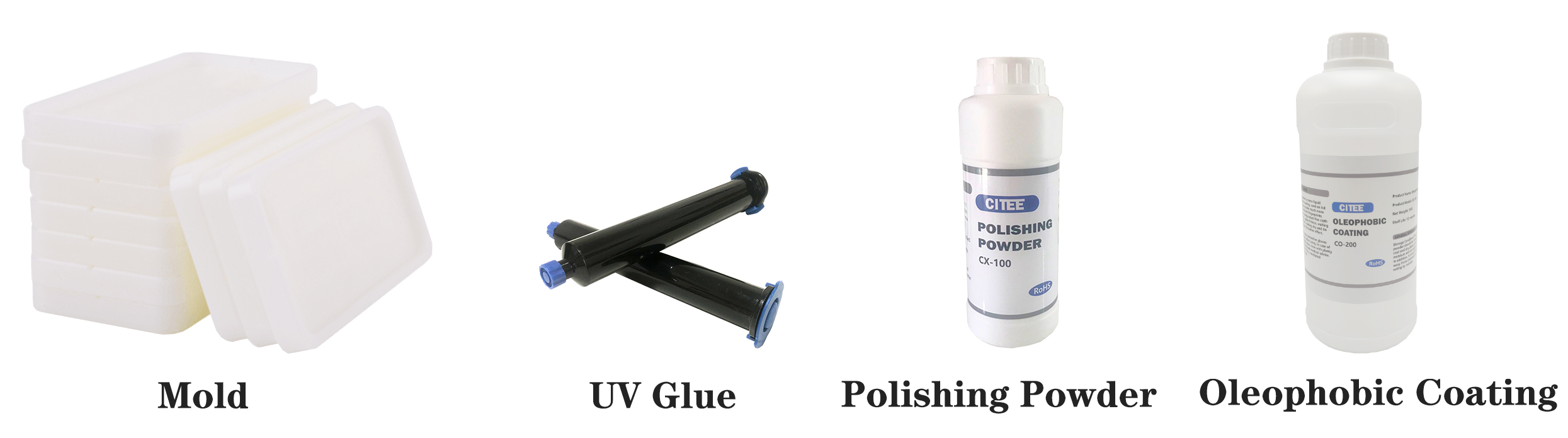
Optimizing Slurry Mixing and Application
The way your operators mix and apply the cerium oxide slurry directly influences the polishing powder consumption per screen cost calculation. Using water that is too hot or too cold can alter the chemical activation of the abrasive. Furthermore, an incorrect water-to-powder ratio results in a slurry that is either too thin (requiring more passes and more powder) or too thick (causing clumping and uneven distribution). Standardizing the mixing protocol across all shifts ensures consistent abrasive utilization and prevents unnecessary waste.
The Polishing Powder Consumption Per Screen Cost Calculation Formula
Let us establish a standardized method for your accounting and procurement teams to track efficiency.
| Variable | Measurement Unit | Factory Example |
|---|---|---|
| Total Powder Used | Grams (g) | 500g |
| Total Screens Processed | Units | 250 screens |
| Cost per Gram | Variable (based on PI) | See formal PI |
Polishing Powder Consumption Per Screen Cost Calculation Formula:
(Total Powder Used in Grams ÷ Total Screens Processed) × Cost per Gram = Cost Per Screen.
By logging the exact weight of powder dispensed at the start and end of every shift, you can generate accurate historical data. This data allows procurement managers to forecast bulk orders precisely, avoiding both stockouts that halt throughput capacity and overstocking that ties up working capital.
Scaling Up: From 500g Bottles to 5KG Bulk Bags
As your throughput capacity increases, purchasing patterns must shift to maintain healthy margins. Small repair shops might start with a cerium oxide polishing powder 500g bottle to test machine parameters and establish baseline metrics. However, high-volume factories processing thousands of units monthly must transition to bulk procurement. Upgrading to a cerium oxide polishing powder 5KG bag drastically lowers your cost-per-gram, directly improving the final metric in your polishing powder consumption per screen cost calculation.

Important Limitations: Surface Scratches vs. Deep Fractures
It is critical to set realistic expectations for your production line and your B2B clients. Polishing technology is strictly limited to light surface scratches on glass screens. It CANNOT fix deep cracks, shattered glass, or deeply fractured LCD/OLED panels. Attempting to polish deep structural damage will not yield a sellable unit and will only waste your abrasive consumables. Always inspect incoming inventory to separate surface-scratched glass from deeply damaged screens before routing them to the polishing station.
Conclusion
Ultimately, refining your polishing powder consumption per screen cost calculation is a continuous process of monitoring machine calibration, operator technique, and supply chain efficiency. By tracking these metrics, B2B refurbishers can ensure sustainable unit cost reduction and maximize their return on investment.
To optimize your specific production line and receive a formal Proforma Invoice (PI) tailored to your needs, please contact our B2B sales team. When reaching out, kindly provide your company name, monthly refurbishment volume, target quantity, and whether you need matching consumables. Our engineering team will analyze your throughput requirements and recommend the most cost-effective consumables strategy.
No. Polishing is strictly for light surface scratches. It cannot fix deep cracks, shattered glass, or structural fractures.
We recommend recalculating monthly or whenever you change polishing pads, adjust machine pressure, or switch to a new batch of cerium oxide to maintain accurate cost tracking.
Ensure your polishing blankets are in optimal condition, calibrate your machine’s downward pressure, and use a properly mixed slurry to maximize abrasive efficiency and prevent waste.