
Scaling Your Operation: The Ultimate TBK 938 Alternative High Volume Refurbishment Guide
As factory owners and wholesale refurbishers scale their operations, finding a reliable TBK 938 alternative high volume refurbishment solution becomes critical for maintaining profit margins. While single-station machines work for small repair shops, large-scale facilities require multi-station throughput to reduce unit costs and eliminate glass scrap. This guide explores how upgrading to industrial-grade polishing equipment transforms light surface scratch removal into a highly profitable, repeatable process.
Why Factories Need a TBK 938 Alternative High Volume Refurbishment Strategy
The TBK 938 is a popular separator and polisher for small retail repair shops, but it fundamentally lacks the automated, multi-station throughput required for industrial scale. When processing hundreds of devices daily, labor costs and inconsistent manual pressure lead to higher scrap rates and bottlenecked production lines. A dedicated TBK 938 alternative high volume refurbishment strategy focuses on mechanized consistency, integrated air supply, and batch processing.
It is vital for procurement managers and factory owners to understand the technical limitations of polishing technology. Industrial polishing equipment is strictly designed to fix LIGHT SURFACE SCRATCHES on glass screens. It cannot fix cracked, deeply fractured, or shattered glass. Attempting to polish deep structural damage will only result in wasted consumables, ruined inventory, and compromised device integrity. By strictly routing only surface-scratched glass to your polishing line, you maximize yield and protect your bottom line.
Evaluating Multi-Station Polishing Systems for Maximum ROI
To achieve true unit cost reduction, refurbishment facilities must transition from manual, single-head operations to mechanized, multi-station systems. CITEE Industrial offers a tiered lineup designed specifically for B2B throughput requirements.
For mid-sized operations scaling up, the CPM-004/CPM-008 provides 4 to 8 stations with a built-in compressor. This integration eliminates the need for complex external air infrastructure, ensuring uniform pressure across all polishing heads and reducing facility setup costs.
For massive refurbishment factories aiming to dominate their market, the CPM-016 16-station machine represents the ultimate TBK 938 alternative high volume refurbishment asset. By processing 16 screens simultaneously, it drastically cuts the labor cost per unit and maximizes daily throughput capacity. The ROI on a 16-station system is typically realized within months due to the sheer volume of salvageable glass processed per shift.
For smaller repair shops looking to transition from manual methods to mechanized polishing, the CPM-002 dual-station desktop machine offers a highly reliable entry point without requiring a massive floor footprint.

Selection Checklist for Refurbishment Throughput
When evaluating your factory’s needs, use the following checklist to align your equipment purchase with your operational scale:
| Operational Factor | Small Repair Shop | Large Refurbishment Factory |
|---|---|---|
| Machine Stations | 2 Stations (e.g., CPM-002) | 8 to 16 Stations (e.g., CPM-008/CPM-016) |
| Air Supply | External Compressor Required | Built-in Compressor (CPM-004/008) or Centralized |
| Labor Cost per Unit | Higher (Manual intervention) | Lowest (Batch processing) |
| Primary Goal | Flexibility & Low CapEx | Maximum Throughput & Unit Cost Reduction |
Optimizing Consumables and Operational Costs
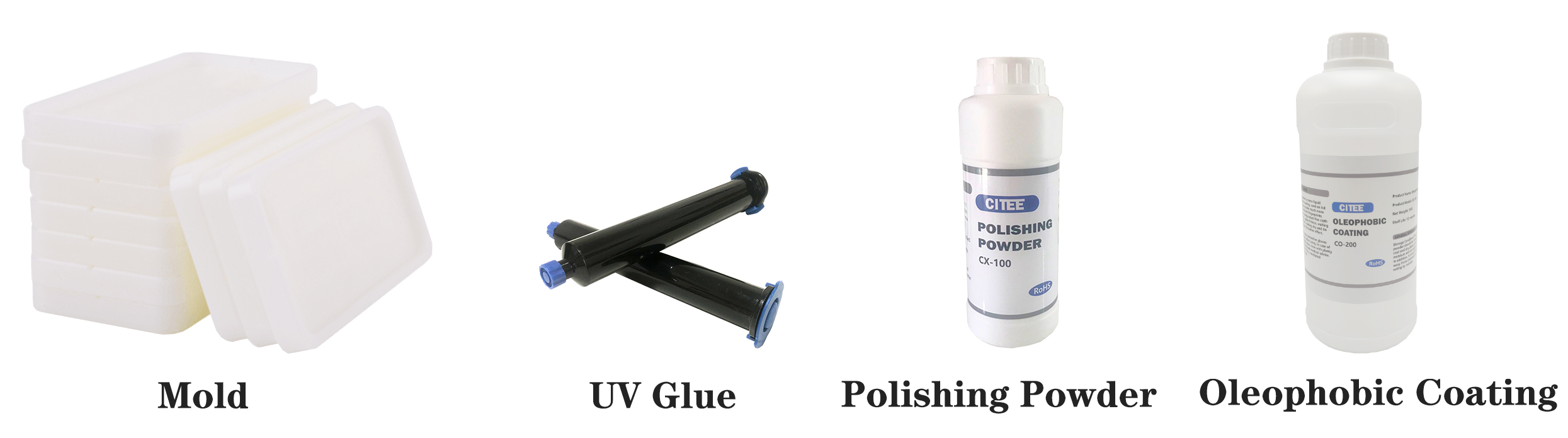
The true cost of refurbishment isn’t just the initial machine investment; it’s the ongoing consumables repurchase cost. Polishing pads, cerium oxide slurry, and protective films represent a significant portion of your OPEX. An optimized TBK 938 alternative high volume refurbishment setup ensures even slurry distribution and precise pressure control, reducing consumable waste by up to 30% compared to older, manual machines.
To understand how different machines handle slurry dispersion, pressure consistency, and overall capability, review our comprehensive Screen Polishing Machine Comparison (REFOX/TBK alternatives) guide. This resource breaks down the technical specifications necessary for high-yield factory environments.
Conclusion: Maximizing Yield with the Right Equipment
Scaling a refurbishment business requires eliminating bottlenecks and strictly controlling the scrap rate. By upgrading to a multi-station system, factory owners can achieve the throughput necessary to process large wholesale lots efficiently. Remember, these industrial systems are engineered exclusively to remove light surface scratches; they will not repair deep cracks or shattered glass. Implementing a proper TBK 938 alternative high volume refurbishment workflow ensures that every salvageable screen is recovered, directly impacting your net profit.
To receive a formal Proforma Invoice (PI) and discuss the best configuration for your facility, please contact our sales team and provide: your company name, monthly refurbishment volume, target quantity, and whether you need matching consumables.
Frequently Asked Questions
1. Can these polishing machines fix cracked or shattered screens?
No. Industrial screen polishing machines are strictly designed to fix LIGHT SURFACE SCRATCHES on glass screens. They cannot fix cracked, deeply fractured, or shattered glass. Polishing deep structural damage will ruin the screen and waste consumables.
2. How does a 16-station machine improve ROI over a standard dual-head polisher?
A 16-station machine like the CPM-016 processes multiple screens simultaneously, drastically reducing the labor cost per unit and increasing daily throughput capacity. This batch processing capability significantly lowers the unit cost of refurbishment compared to single or dual-station machines.
3. Do I need to purchase an external air compressor for the CPM-004 or CPM-008?
No. The CPM-004 and CPM-008 models feature a built-in compressor. This integration ensures uniform pressure across all polishing heads and eliminates the need to purchase and maintain separate external air infrastructure.
No. Industrial screen polishing machines are strictly designed to fix LIGHT SURFACE SCRATCHES on glass screens. They cannot fix cracked, deeply fractured, or shattered glass. Polishing deep structural damage will ruin the screen and waste consumables.
A 16-station machine like the CPM-016 processes multiple screens simultaneously, drastically reducing the labor cost per unit and increasing daily throughput capacity. This batch processing capability significantly lowers the unit cost of refurbishment compared to single or dual-station machines.
No. The CPM-004 and CPM-008 models feature a built-in compressor. This integration ensures uniform pressure across all polishing heads and eliminates the need to purchase and maintain separate external air infrastructure.