
Waterproofing Failures Glue Mold Choice Fix Guide for B2B Refurbishment
In high-volume phone refurbishment, analyzing waterproofing failures glue mold choice fix strategies is essential to maintain unit integrity and reduce scrap rates. Factory owners and wholesale operators know that improper sealing leads to costly returns and damaged reputations. While our equipment is specifically engineered to restore light surface scratches on glass screens, the final assembly phase requires absolute precision. It is critical to note that polishing cannot fix deep cracks or shattered glass—only surface-level scratches. However, for fully refurbished units passing through your facility, eliminating sealing defects is paramount for B2B success and securing repeat wholesale orders.
Understanding the Root Causes of Sealing Defects
In any large-scale refurbishment facility, throughput capacity is directly tied to the reliability of your assembly processes. When devices fail waterproofing tests, the root cause is rarely a single point of failure. Instead, it is usually a combination of inconsistent adhesive application, improper device alignment, and suboptimal curing environments. Manual glue application introduces significant variability. Operators may apply too much adhesive, leading to squeeze-out that contaminates internal components, or too little, resulting in voids that compromise the IP rating. This variability directly increases your scrap rate and forces costly rework, ultimately leading to warranty claims and loss of B2B contracts. To achieve consistent unit cost reduction, facilities must transition from manual, subjective processes to automated, repeatable systems. By standardizing the application parameters, you not only improve the yield of your production line but also optimize your consumables repurchase cost by eliminating waste.
Waterproofing Failures Glue Mold Choice Fix: A Systematic Approach
To effectively address these challenges, we must look at the synergy between the adhesive material and the physical holding mechanism. Implementing a comprehensive waterproofing failures glue mold choice fix protocol means selecting materials that work in perfect harmony. The first component is the adhesive itself. Our UV waterproof sealing glue 30ml/50ml is formulated specifically for high-volume B2B environments. It offers the ideal viscosity for precise dispensing and cures rapidly under UV light, allowing for immediate handling and testing. This rapid cure time is crucial for maintaining high throughput capacity on the factory floor.
The second component is the physical alignment. Even the best adhesive will fail if the device is not held perfectly level during application. This is where model-specific phone holding molds/jigs become indispensable. Unlike universal clamps that allow for micro-movements, our precision-machined molds secure the device at the exact Z-height and angle required for a uniform glue line. This eliminates human error in positioning, ensuring that every unit receives the exact same sealing profile, drastically reducing the likelihood of field failures.
Automating the Process to Maximize ROI
While precise molds and high-quality adhesives are foundational, the true leap in operational efficiency comes from automation. Integrating an automatic 3-axis glue dispenser into your assembly line transforms your sealing process from a manual bottleneck into a high-speed, repeatable operation. The 3-axis movement ensures that the glue nozzle maintains a constant distance and angle relative to the device chassis, regardless of the specific model being processed.

This level of precision directly impacts your bottom line. By controlling the exact volume of adhesive dispensed down to the milligram, you prevent over-application. Over time, the savings in adhesive volume alone can significantly offset the initial capital expenditure of the automated equipment. Furthermore, automation reduces your reliance on highly trained manual labor for the sealing step, freeing up your skilled technicians to focus on more complex diagnostic and repair tasks. This holistic approach to automation is a key driver for maximizing ROI in modern refurbishment factories.
Managing Consumables Repurchase and Operating Costs
A critical aspect of running a profitable refurbishment business is the continuous management of operating expenses. While the primary focus of our machinery is to restore light surface scratches on glass screens—remember, we cannot fix deep cracks or shattered glass—the secondary processes like sealing require their own consumables. Managing the lifecycle and repurchase cycle of these materials is vital. Bulk purchasing of consumables should always be aligned with your actual throughput to avoid material expiration and waste.
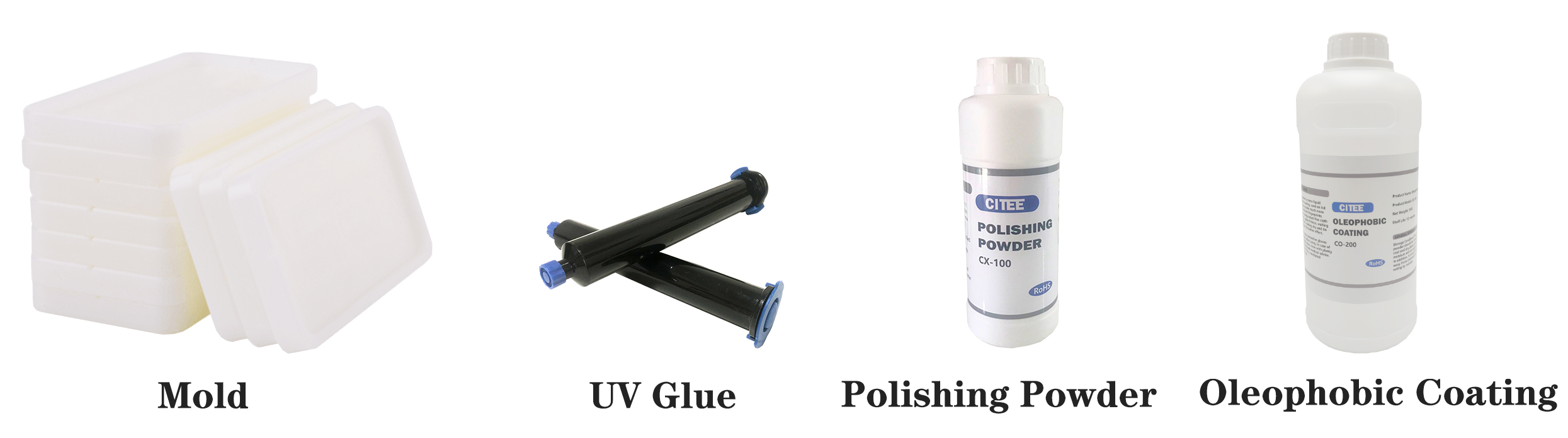
For a complete breakdown of how to calculate and optimize your operational expenses across all stages of refurbishment, review our Polishing Consumables & Operating Cost guide. Understanding the total cost of ownership for your polishing pads, compounds, and sealing adhesives allows you to forecast your consumables repurchase cost accurately. By pairing automated dispensing with high-yield adhesives, you ensure that every milliliter of consumable is utilized effectively, directly contributing to your overall unit cost reduction.
Selection Checklist for Sealing Consumables
| Component | Selection Criteria for B2B Refurbishment |
|---|---|
| Adhesive | Must feature controlled viscosity for automated dispensing and rapid UV curing to maintain throughput capacity. |
| Holding Molds | Must be model-specific to ensure exact Z-height alignment and prevent micro-movements during glue application. |
| Dispensing Equipment | Requires 3-axis automation to guarantee consistent glue line width and volume, minimizing consumables waste. |
| Inventory Management | Track monthly usage rates to optimize consumables repurchase cost and prevent production line stoppages. |
Conclusion
Addressing sealing defects requires a systematic approach that goes beyond simply applying more adhesive. By understanding the root causes of waterproofing failures and implementing a rigorous glue mold choice fix strategy, factory owners can significantly reduce their scrap rate, improve throughput capacity, and maximize their return on investment. Remember, while our polishing technology is strictly limited to fixing light surface scratches and cannot repair deep structural damage, our sealing solutions are designed to ensure your fully refurbished units meet the highest quality standards. CITEE Industrial supports our partners with ongoing technical training for consumables management to ensure long-term operational success.
To request a formal Proforma Invoice (PI) and optimize your production line, please provide your company name, monthly refurbishment volume, target quantity, and whether you need matching consumables. Our engineering team will analyze your specific requirements and provide a tailored solution to enhance your facility’s operational efficiency.
No. Our technology is strictly designed to fix light surface scratches on glass screens. It cannot repair deep cracks, shattered glass, or structural damage.
By providing precise 3-axis control, the dispenser eliminates over-application and human error, ensuring you use the exact required volume of adhesive per unit, thereby lowering your overall consumables repurchase cost.
Model-specific phone holding molds ensure the device is held at the exact Z-height and angle required for a uniform glue line, which is critical for preventing waterproofing failures and ensuring consistent throughput.